
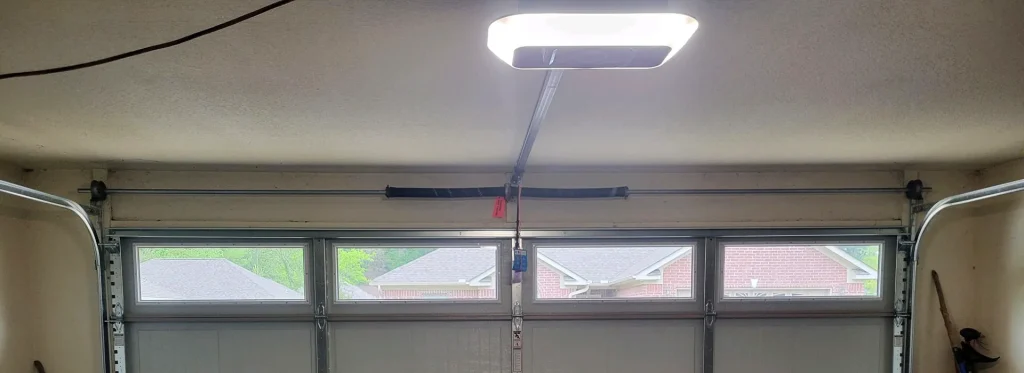
A failing garage door opener rarely stops working all at once. It communicates through a pattern of symptoms that develop gradually: intermittent response, grinding sounds, a door that reverses without obstruction, slower movement, or a motor that pauses mid-cycle before resuming. One of the more instructive calls involved a homeowner whose opener worked fine most of the time but occasionally refused to respond to the remote or reversed without visible cause. On inspection, the logic board showed heat stress consistent with years of operation in an unventilated East Texas garage. The nylon drive gear also showed wear from lifting a door under declining spring tension. Two components were degrading simultaneously, each contributing different symptoms. The homeowner had assumed the problem was the remote battery. For homeowners in Marshall and surrounding areas, this guide walks through each sign, what it means for your system technically, and why accurate diagnosis matters before any repair or replacement decision.
The Opener Responds Inconsistently to the Remote or Wall Button
Intermittent response is the most common early sign of opener decline and the most frequently misattributed symptom.
When the opener works fine most of the time but occasionally fails to respond with no apparent reason, the natural first assumption is a weak remote battery. That is always worth ruling out first. A remote that still lights up when pressed but fails to trigger the opener may have enough charge for the indicator but not enough to transmit a reliable signal.
After the battery is confirmed, the next layer is the antenna. A damaged antenna wire or obstruction between the remote and the opener unit can create range issues that present as intermittent response.
The deeper cause, and the one most often missed, is logic board degradation. The logic board is the control center of the opener. It receives signals, manages travel limits, controls safety responses, and directs the motor. In an attached East Texas garage, summer heat combined with humidity accelerates two specific failure mechanisms: vibration from thousands of motor cycles causes solder joints to develop micro-fractures that disrupt electrical conductivity, and humidity inside the motor housing causes oxidation on circuit traces that disrupts signal processing.
The result is a board that responds erratically at peak temperature before failing more consistently as damage progresses. In our experience, these issues get written off as a battery problem for months before the logic board is identified as the cause. IDA-certified technicians test the board under controlled conditions to distinguish board failure from antenna issues before any replacement is recommended.
The Opener Makes Grinding or Clicking Sounds During Operation
Grinding or clicking sounds during opener operation almost always point to drive gear wear, one of the most common internal opener repairs on residential systems.
The drive gear inside the motor unit is made from nylon or composite material, meshing with a metal worm gear on the motor shaft to transfer rotation into trolley movement. The nylon design is intentional. It acts as a sacrificial component designed to absorb wear and protect the motor from overload. Over time, the teeth flatten or shear, causing the gears to slip rather than mesh cleanly. That slippage produces the grinding or clicking sound.
LiftMaster gear kit documentation indicates nylon drive gears last approximately 8 to 12 years under normal conditions. That lifespan shortens when the door spring system is under-tensioned, shifting more door weight onto the motor on every cycle and accelerating gear wear beyond its designed service rate.
What we find on drive gear calls is that the spring system almost always needs attention alongside the gear. Replacing the gear without addressing spring tension creates the same overload conditions that produced the failure. The 25-point safety inspection our technicians complete on every call surfaces that connection before any parts are ordered.
White plastic shavings inside the opener housing are a reliable visual confirmation of a stripped gear.
The Door Reverses Before Closing or Opens Without Being Activated
A door that reverses before reaching the fully closed position is showing one of two things: a sensor alignment issue or a force setting calibration issue. Distinguishing between them changes the repair.
Photo-eye sensors must maintain a clean, aligned beam path. When sensors drift out of alignment, the opener reads it as an obstruction and reverses. East Texas heat causes metal mounting hardware to expand and contract repeatedly through the seasons. Over time, that thermal cycling shifts sensor brackets enough to misalign the beam without physical contact.
Force settings are the second common cause. Every opener includes adjustable force settings that define how much resistance the door can encounter before reversing. Settings that drift from calibration can cause the door to reverse when encountering normal resistance from the weatherstrip or a slight track imperfection.
A door that opens by itself warrants immediate attention. Phantom openings typically point to a logic board generating random output signals, a remote frequency conflict, or security code degradation in an older opener. They represent both a security concern and a logic board failure signal. The cause should be identified by a technician rather than monitored.
The Opener Moves the Door Slowly or Struggles on the Lift
A door moving noticeably more slowly than it used to is showing opener strain, and the source is almost never the opener itself.
The opener motor is designed to lift the door in partnership with the spring system. When the spring loses tension and contributes less counterbalance force, the motor absorbs progressively more door weight on every lift cycle. That added load slows the lift, generates more heat inside the motor housing, and accelerates wear on the gears and motor windings.
Most modern openers include a thermal overload protector that shuts the motor down temporarily when internal temperature exceeds a safe threshold. A door that stops mid-cycle and resumes normal operation after ten to fifteen minutes of rest is almost always showing thermal protection activation rather than motor failure. The motor is protecting itself from damage caused by the load the spring can no longer carry.
ANSI/DASMA 103, the standard governing counterbalance systems on residential sectional garage doors, specifies that spring sizing must correspond to door weight because the consequences of under-tensioned springs compound across every connected component with every cycle. A slow door is frequently the opener communicating that the spring system needs attention.
The Motor Runs but the Door Does Not Move
When the opener motor runs but the door does not move, the diagnosis almost always points to one of three causes: a stripped drive gear, a disconnected trolley, or an accidentally triggered manual release.
A stripped gear produces the motor sound without transferring force to the trolley. When the nylon gear teeth are fully sheared, the worm gear spins freely without engaging. The motor runs, the housing vibrates, and the door sits still.
A broken or disconnected trolley carriage means the motor is running the chain or belt without the trolley engaged. This can result from mechanical failure in the trolley mechanism or a worn carriage that has separated from the drive.
The manual release cord is sometimes accidentally triggered by a stored item or during routine access. A door that lifts manually after the motor runs without moving it should be checked for manual release engagement before diagnosing a mechanical failure. Re-engaging the trolley takes less than a minute.
In our experience, stripped drive gears almost always accompany a spring system under higher-than-designed load. Addressing both on the same visit prevents the overload conditions that produced the original failure from repeating on the new gear.
When to Repair and When to Replace the Opener
A drive gear replacement, sensor realignment, or force setting recalibration on an opener in otherwise good condition is almost always worth doing. These are component repairs that restore full function without replacing the entire unit.
A logic board failure changes the equation. Logic boards for older models can be difficult to source, and the cost of a replacement board on a unit ten or more years old may approach the cost of a new installation. At that point, a new opener makes more practical sense and opens access to smart technology available in current LiftMaster and Genie models, including remote monitoring, smartphone control, and alert notifications that older units cannot support.
IDA-certified technicians assess the opener, drive components, sensors, and door system condition before recommending repair or replacement. That full assessment is what protects homeowners from replacing components that are functioning while missing the one that is actually failing.
Schedule Garage Door Opener Repair With Lonecrest Garage Doors
An opener showing any of the signs covered in this guide benefits from a full system assessment before any repair or replacement decision. The symptom may be the opener itself, or it may be the spring and track system the opener is working against.
Lonecrest Garage Doors services LiftMaster, Genie, and other major residential opener brands. Every service visit includes a 25-point safety inspection that evaluates opener response, drive gear condition, logic board function, sensor alignment, and spring system performance. Lonecrest Garage Doors serves homeowners in Marshall and nearby areas with veteran-owned, IDA-certified service built on honest diagnosis and dependable workmanship. Reach out to Lonecrest Garage Doors today to schedule a full system assessment and get an accurate picture of what your opener needs.